One and a half clocks
The inspiration and idea
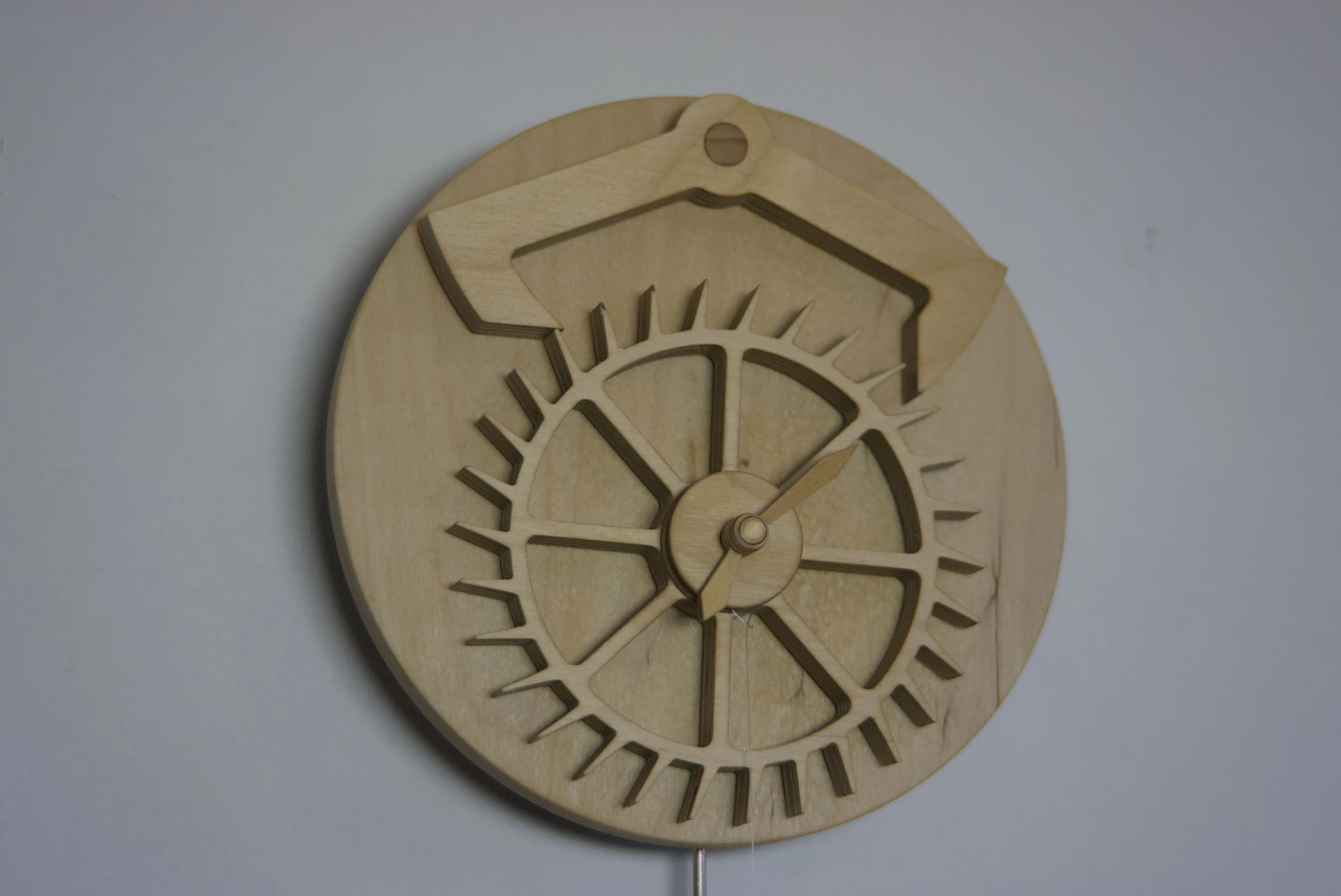
I recently saw some very large wall clocks with exposed mechanisms and gears that turn the minute and hour hands. I really like art that demonstrates mechanics like this, so I wanted to make my own mechanical clock that shows off some interesting mechanisms. After some research I noticed that the heart of every mechanical clock is something called the escapement, which ensures that a gear turns at a specific rate, so that you can then have the second/minute/hour hands turn at the right speed. The escapement is a very mesmerising mechanism and I decided to make that the main feature of my clock.
An animation of an escapement is below, showing two important parts: the pallet and pendulum (grey parts) and the escape wheel. The escape wheel is loaded so that it wants to rotate, for example by a weight on a string wrapped around the wheel; if the wheel was allowed to rotate freely it would do so very quickly for a short time and then stop. However, when you add a pendulum to the system as shown, the wheel hits the pallet and starts the pendulum swinging, then the energy given to the swinging pendulum is cleverly used to stop the wheel spinning further. Now, the escape wheel can only rotate briefly (i.e. tick or tock) near the end of the pendulum swings.

This kind of pendulum mechanism only swings very small angles, about 6 degrees or so; In this situation the period (or rate of swinging) of the pendulum mainly depends upon the length of the pendulum. Thus, getting the clock to keep time, in theory, is done by adjusting the length of the pendulum until the escape wheel turns at the desired rate. This rate then causes gears driven by the escape wheel to fully rotate the clock hands once a minute and once an hour.
Of course, as beautiful as I find the mechanical clock, it only works while it is loaded. Before batteries were commonplace, keeping a clock on time required people to reload clocks regularly, often by winding a weight around the escape wheel. I’d like my clock to be more handsoff, so I decided to have a modern battery operated clock hidden within a mechanical clock’s escapement mechanism. This lets the clock keep time accurately without much work, and also show an amazing clock mechanism at work. What I want to make is more than just one clock, the escapement is surely at least half a clock, so I’m making one and half clocks.
The result
I’m happy with how this creation turned out, a wooden clock is certianly very eye catching and the battery operated clock is hidden well enough.
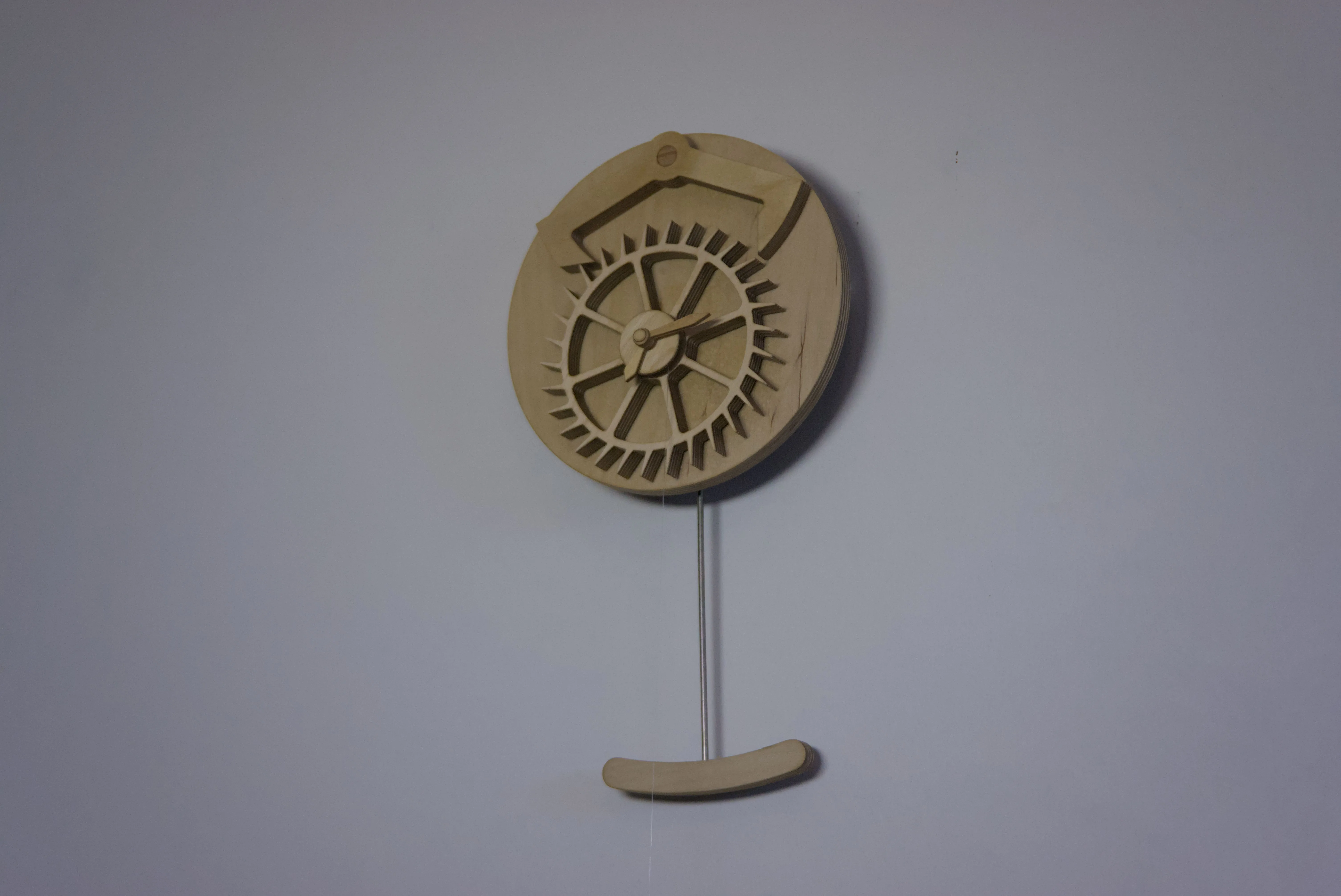
In the photo below you see the entire clock including a wooden falling weight, which you wrap around the pulley in the center of the big gear. The mechanism runs reliably and smoothly although it’s definitely not meeting a clock maker’s standards!
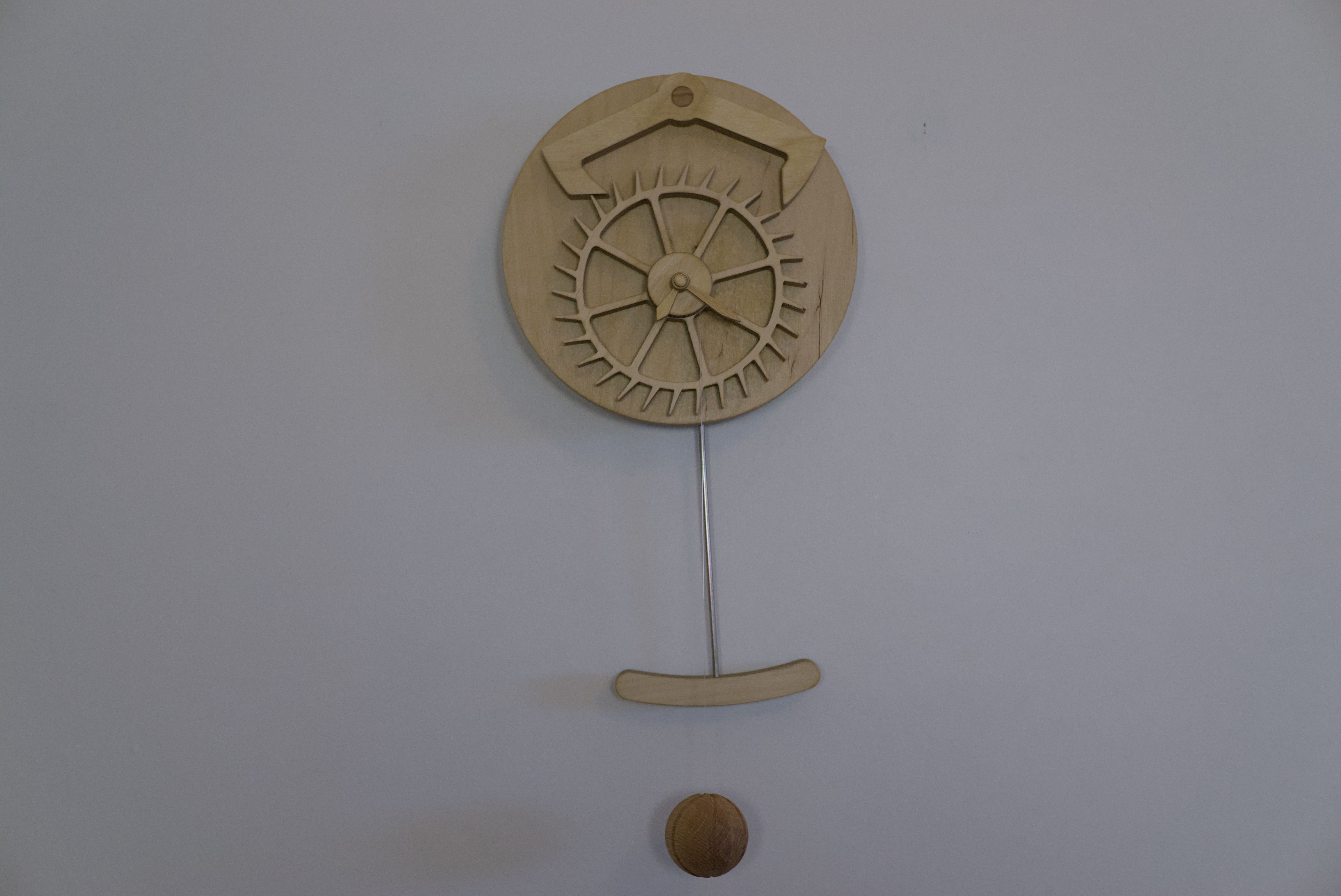
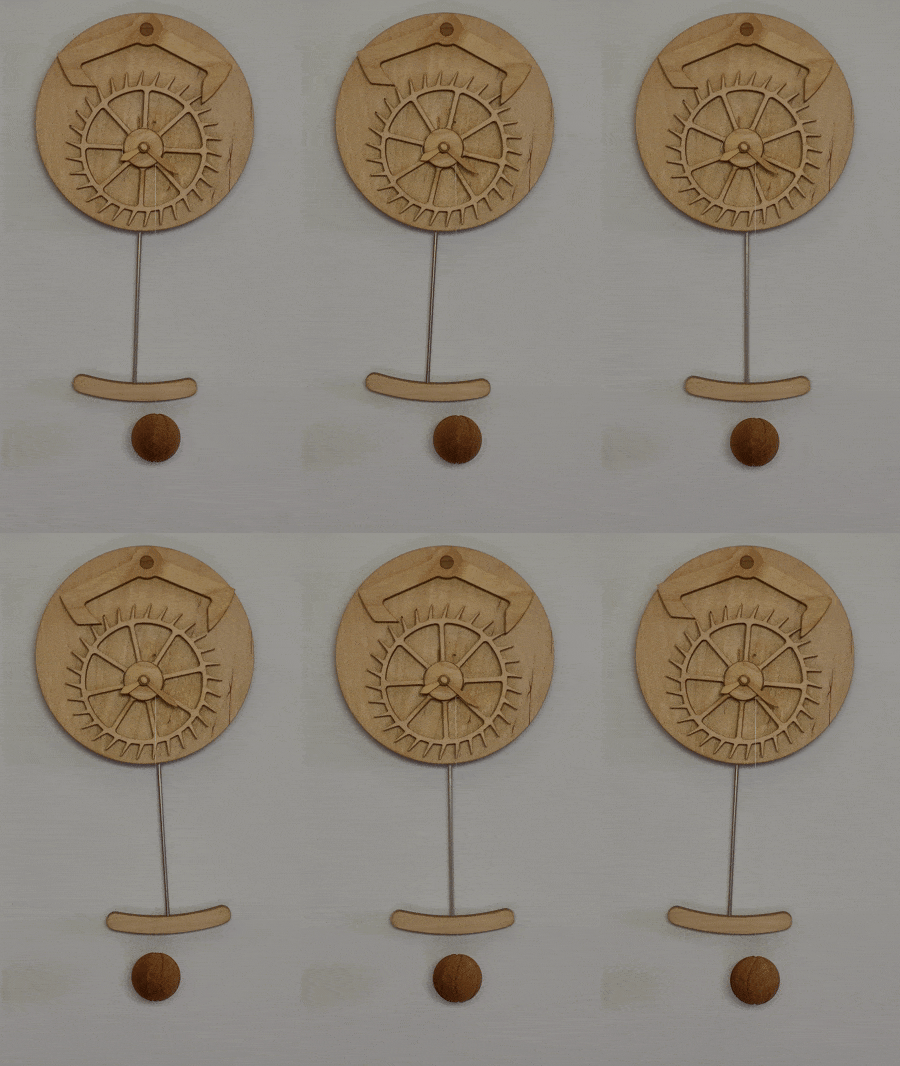
I really enjoy winding the weight around the pulley and watching the escapement mechanism at work. The slow movement of the gears and falling weight along with the ticking sound is very satisfying; You can see a video of this with audio on my Instagram video here.
Interested?
If you like this clock maybe you’ll find something interesting at my etsy store. If you decide to purchase something from me or share any of my work, thank you. It’s really encouraging and helps me to continue creating. Finally, if you’ve seen something on my site that I don’t sell at my store, I’m happy to make it for you. Just get in contact with me, and I can organise a custom etsy item you can purchase.